OPSEC Per Operation: Scope, Deletion, and the Report’s Afterlife
About This Lesson
Generic operational security advice is a starting point, and it stays abstract until somebody applies it to an actual job. “Use Tor for anonymity” is advice. A specific prescription, with an identity, a network, a storage model and a disclosure plan for one kind of operation, is operational security. That per-operation approach is the right one. So is the usual structure, before, during and after the operation, and the usual lists of common failures for each kind of work are drawn from real practice. The penetration testing failures in particular will be familiar to anybody who has worked an engagement.
This lesson works through five operations: vulnerability research, penetration testing, bug bounty hunting, security consulting, and source protection. It adds four things to the standard treatment. One is about structure, two are about correctness, and one is about a gap that matters more than anything else here.
Four of the five operations risk your career. The fifth risks somebody else’s liberty. Guides usually give all five the same template and one decision matrix, which reads as though they sit on a single scale of severity. Source protection is not the top of that scale. It is a different activity, with a different beneficiary, and for nearly everybody reading this course the correct answer is a referral rather than a procedure.
Four commonly prescribed procedures do not produce the result claimed for them. Multi-pass overwrite does not sanitize flash storage. Tor-only research is not sustainable and is not where the protection comes from. Generated cover traffic is a second signature. Cryptocurrency bounty payment is more traceable than a bank transfer and creates more tax work, not less.
The usual bug bounty identity model is missing the party that always knows who you are. Both major platforms require a tax form before they pay you.
And the two largest exposures in a penetration test are at the edges of the engagement. What the client is actually able to authorize, before it starts. And where the report lives, for years after it ends.
Learning Objectives
After you read this lesson, you can do these tasks:
- Separate operations by who bears the consequence, and treat source protection as a referral decision.
- Sanitize client data on modern storage using a method that works, and certify the method you actually used.
- Check whether a signed scope contains assets the client is not able to authorize, and where to look for the governing policy.
- Write a penetration test report that degrades safely when it is stored, forwarded and kept for years.
- State accurately what pseudonymity on a bounty platform does and does not conceal.
- Read a case study for its failure modes, and notice when it has none.
Prerequisites
- Lessons 8.1 to 8.3, and in particular 8.2’s layer two and 8.3’s point about the artifacts your own work produces.
- Module 1, on threat modeling, which this lesson applies.
- Module 5 on encryption, for the container and key handling in Section 2.
1. Four Operations Risk Your Career. One Risks Somebody Else.
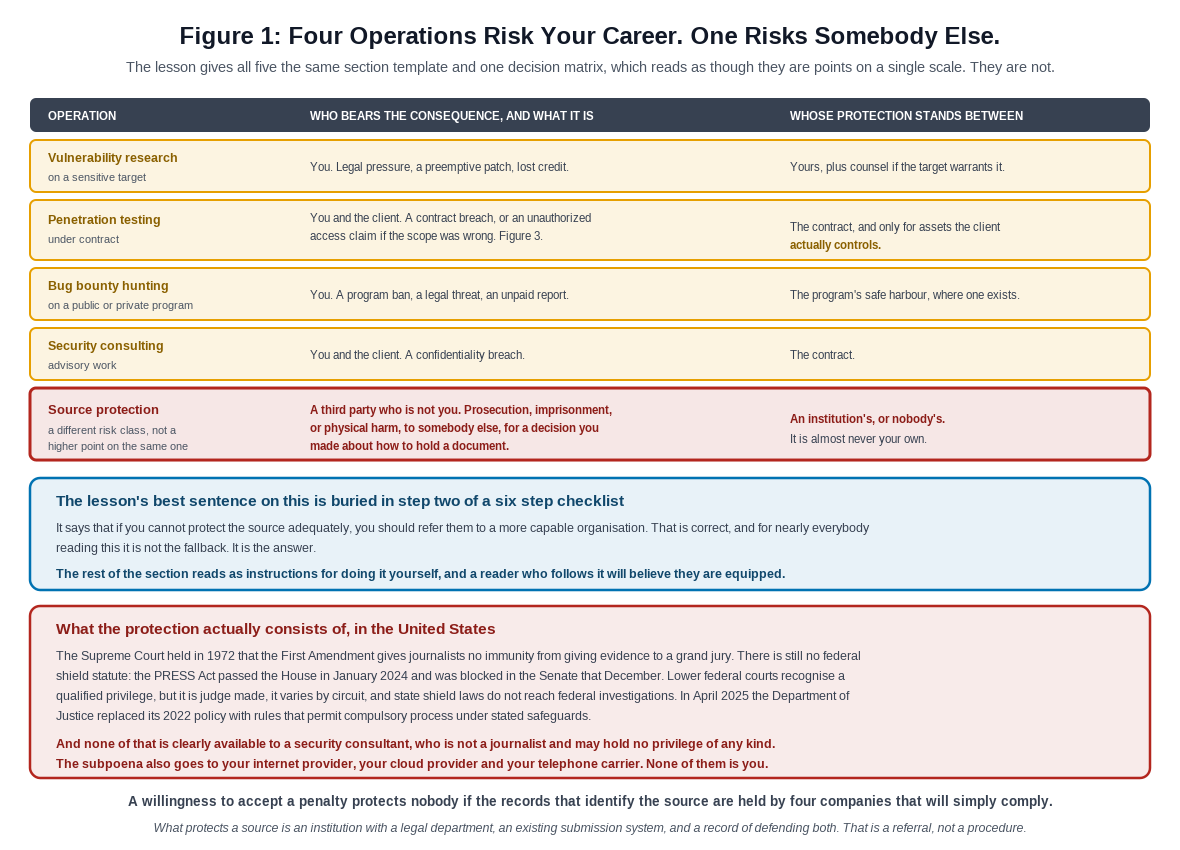
Figure 1. The five operations, sorted by who pays for a failure.
Vulnerability research, penetration testing, bug bounty hunting and security consulting share a property. When operational security fails, the person who suffers is substantially you. You lose a contract, a bounty, a reputation, or you acquire a legal problem. These are serious outcomes and they are survivable, and the protection standing between you and them is yours to build: a contract, a safe harbor, legal counsel, a compartment.
Source protection is not a more severe version of that. It is a different activity.
The consequence falls on a third party who is not in the room, who did not take this course, who in many cases does not understand the technology, and who may face prosecution, imprisonment or physical harm as a result of decisions you make about how to hold a document. Guides that cover it usually say this clearly. Then they give it the same template as the other four, and a row in the same decision matrix.
What the protection actually consists of
Source protection checklists often end with a commitment: legal consequences, physical consequences and prison listed as acceptable, under a heading such as ABSOLUTE. That is sincere and it is the wrong frame, because it describes a commitment rather than a capability.
In the United States the position is this. The Supreme Court held in 1972, in Branzburg v. Hayes, that the First Amendment gives journalists no immunity from providing evidence to a grand jury (Reference 6). There is still no federal shield statute: the PRESS Act passed the House in January 2024 (Reference 7) and was blocked in the Senate that December (Reference 8). Lower federal courts have recognized a qualified reporter’s privilege, but it is judge-made, it varies by circuit, and state shield laws do not apply to federal investigations (Reference 9). In April 2025 the Department of Justice replaced its 2022 policy, which had generally barred compulsory process for journalists’ newsgathering material, with rules permitting it under stated safeguards.
Every sentence of that describes protections for journalists. A security consultant who receives leaked documents is not a journalist and may hold no privilege at all.
Then there is the structural point, which does not depend on the law at all. A subpoena does not only go to you. It goes to your internet provider, your cloud provider, your telephone carrier and your email host. Four companies, none of which is you, none of which has made any commitment to the source, and all of which have a compliance department whose job is to respond. Your willingness to accept a penalty protects nobody if the records that identify the source are held elsewhere and produced on request.
The best step on the checklist
It usually sits early in the pre-operation checklist: if you cannot protect the source adequately, refer them to a more capable organization.
That is correct. For almost everybody reading this course it is not the fallback. It is the answer, and the reason is not caution or squeamishness. It is that what protects a source is an institution: a legal department, an existing submission system, a record of defending both, and continuity that outlasts any individual. A referral gives the source all of that. A procedure gives them one person with good intentions and four service providers who will comply.
Understanding the problem is worth having, so learn the procedure. But put the referral at the front of it, not buried in a checklist after it.
2. Four Procedures That Do Not Do What They Claim
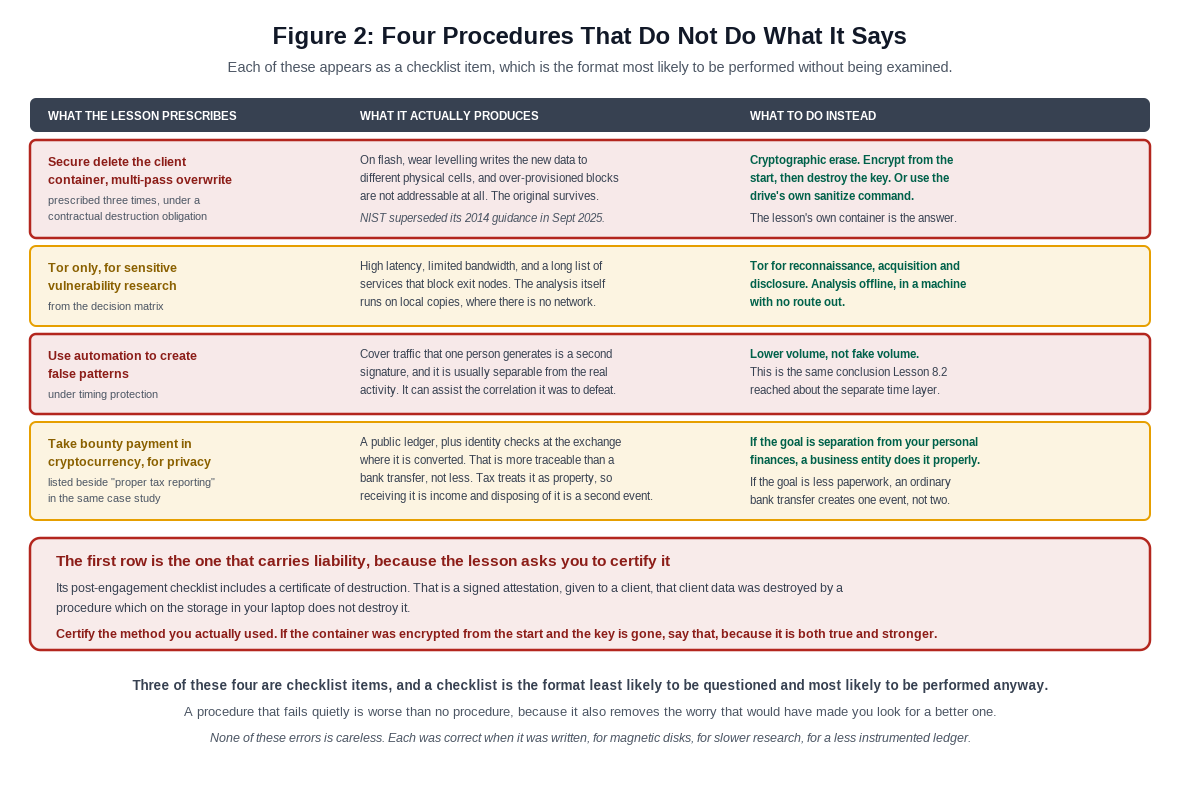
Figure 2. Each of these commonly appears as a checklist item.
Multi-pass overwrite does not sanitize flash storage
Engagement guides commonly prescribe secure deletion by multi-pass overwrite: for the client container after an engagement, for research data after disclosure, and for backups. This is the most consequential of the four errors, because it is performed under a contractual destruction obligation and because you are then asked to certify it.
Multi-pass overwrite is advice from the magnetic disk era. On flash storage it fails for two mechanical reasons, both stated in NIST’s own guidance: areas that are not currently mapped to active areas, such as defect areas, over-provisioned space and unallocated space, may not be sanitized at all, and wear leveling means an overwrite is written to different physical cells rather than to the ones holding the original (Reference 2). The data you intended to destroy is still in cells the operating system cannot address.
Note also that the guidance has moved. NIST published Revision 2 of its media sanitization guidelines on 26 September 2025, superseding the 2014 revision, and now defers technique selection to evolving industry standards rather than specifying commands itself (Reference 1). Anybody writing a destruction procedure today should check the current revision rather than a remembered rule about passes.
What works on flash:
- Cryptographic erase. Encrypt from the start, then destroy the key. The ciphertext may survive in unmapped cells and it does not matter, because without the key it is not recoverable.
- The drive’s own sanitize command, issued at the controller level rather than through the file system.
Here is the part worth noticing: good engagement practice already does the first one. It puts every client engagement in its own encrypted container. The container is the cryptographic erase. Destroying the container file and forgetting the passphrase accomplishes what the overwrite was supposed to accomplish, and it works on the storage that is actually in your laptop. Adding an overwrite on top adds nothing.
The certificate of destruction
Post-engagement checklists commonly include providing a certificate of destruction to the client. If the method was multi-pass overwrite on flash storage, that is a signed attestation that client data was destroyed by a method which did not destroy it.
Certify the method you actually used. If the data lived only inside an encrypted container, if the container file is gone and the passphrase is gone and no copy of either exists, say that. It is true, it is verifiable in principle, and it is a stronger statement than a pass count.
”Tor only” for sensitive vulnerability research
Decision matrices often prescribe Tor only for sensitive vulnerability research.
You cannot do the work that way. Tor is high latency and bandwidth limited, a long list of services blocks exit nodes, and a reader who commits to it will abandon it within a week. That is the sustainability failure again: prescribe the maximal version, and the reader runs the minimal version with no plan.
It is also the wrong place for the protection. The analysis itself happens on local copies, in a virtual machine, against a binary you already have, where no network is involved at all. Tor is valuable for three specific things: reconnaissance, acquiring the target material, and the disclosure correspondence. Those are exactly the moments when your network identity is exposed, and they are a small fraction of the hours.
Use Tor for those. Do the analysis offline, on a machine with no route out, which is better than Tor because it cannot leak at all.
Tor plus a VPN is often offered as an optional extra layer. Module 6 covered why that is not straightforwardly additive and why the ordering changes what you are trusting. Read that before adding one.
Generated cover traffic
Timing protection advice sometimes says to use automation to create false patterns if needed.
Cover traffic generated by one person is a second signature. It has a shape, a periodicity and a set of destinations, and it is usually separable from the real activity by anybody doing the correlation seriously. Having added it, you now have two things to keep consistent, and the fake one is the one that will run while you are on vacation.
Lesson 8.2 reached this conclusion about the separate time layer, and it holds here. The answer is lower volume, not fake volume. Less activity to correlate is a defense of known strength. More activity, some of it manufactured, is a defense of unknown strength that you maintain forever.
Cryptocurrency for financial privacy
Bug bounty privacy advice often recommends paying for your VPN with cryptocurrency and taking bounty payments in cryptocurrency, for financial privacy, in the same breath as proper tax reporting.
These pull against each other.
A public ledger plus an identity check at the exchange where the value is converted is more traceable than a bank transfer, not less, because the transaction graph is permanent and public and the off-ramp is where the identity attaches. And tax authorities in the United States treat virtual currency as property rather than currency (Reference 10), so receiving a bounty in it is income at its value on the day, and later disposing of it is a second reportable event with its own gain or loss. One payment, two sets of records.
If the goal is to separate bounty income from your personal finances, a business entity does that properly. If the goal is less paperwork, an ordinary transfer creates one event rather than two.
Why these errors are not careless
Each of the four was correct when it was first written down, or nearly so. Multi-pass overwrite was right for magnetic disks. Tor-only was more workable when research meant reading. Cover traffic was a reasonable idea before correlation got cheap. Cryptocurrency looked private before chain analysis was an industry.
That is worth saying because the failure mode they share is the one to watch for in your own procedures: a step that was correct, that nobody revisited, that now fails quietly. A procedure that fails quietly is worse than no procedure, because it also removes the worry that would have sent you looking for a better one.
3. The Two Edges of an Engagement
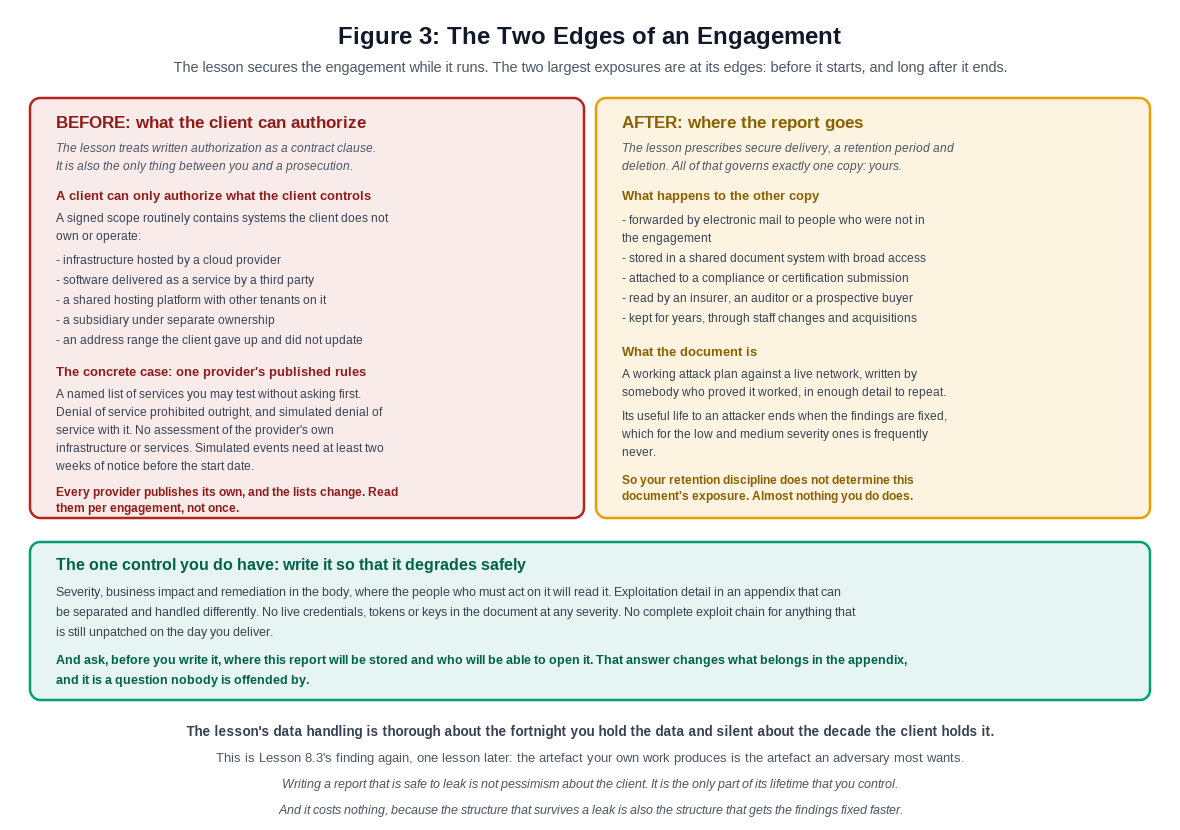
Figure 3. Before it starts, and long after it ends.
Penetration testing OPSEC guidance is usually thorough about the engagement while it runs. Encrypted containers, codenames, secure channels, screen filters, clean desks, scope discipline. All of it is good practice and most of it is standard.
The two largest exposures are outside that window.
Before: a client can only authorize what the client controls
Written authorization usually appears as one contract clause among many, beside liability limitations and reporting requirements. It is that. It is also the only thing standing between a penetration test and an unauthorized access offense, and that makes it different in kind from the other clauses.
A signed scope routinely contains assets the client does not own or operate:
- Infrastructure hosted by a cloud provider, where the provider’s rules govern as well as the client’s permission.
- Software delivered as a service by a third party, where the client is a tenant and the vendor has not agreed to anything.
- A shared hosting platform with other tenants on the same infrastructure.
- A subsidiary or an acquired business under separate ownership.
- An address range the client gave up and never removed from the asset list.
The client authorized all of it in good faith. For several of those the client had no standing to authorize anything.
The cloud case is the common one, and it is concrete. Amazon Web Services publishes a list of services a customer may test without prior approval, and it is a specific named list rather than a general permission. Denial of service is prohibited outright, and so is simulated denial of service, which falls under a separate policy. Customers are not permitted to conduct security assessments of the provider’s own infrastructure or of the services themselves. And simulated event requests must be submitted at least two weeks before the start date (Reference 3).
Read those four facts against a typical engagement calendar. The two-week notice requirement alone is incompatible with a scope that is agreed the week before testing starts, which is most of them.
Every major provider publishes its own policy, the lists change, and the policies are not interchangeable. So this is a per-engagement check rather than a thing you learned once. Two questions, asked during scoping:
- For each asset in scope, who operates the infrastructure it runs on?
- For each operator that is not the client, what does that operator’s testing policy say, and does anything in our plan need notice?
Neither question is awkward to ask, and a client who cannot answer the first one has told you something useful about their asset inventory.
After: the report outlives everything you do
The usual guidance prescribes secure delivery, a retention period, and secure deletion of your copy on a schedule.
All of that governs exactly one copy.
The client’s copy is forwarded by email to people who were not in the engagement. It is stored in a shared document system with access that nobody audits. It is attached to a compliance submission or a certification pack. It is read by an insurer, an auditor or a prospective acquirer during due diligence. It is kept for years, through staff changes, platform migrations and at least one acquisition.
And consider what that document is. A penetration test report is a working attack plan against a live network, written by somebody who proved each step worked, in enough detail to repeat. Its value to an attacker ends when the findings are fixed, which for the low and medium severity ones is frequently never.
So your retention discipline does not determine this document’s exposure. Almost nothing you do determines it.
The one control you have
Write the report so that it degrades safely.
- Severity, business impact and remediation in the body, where the people who must act on it will actually read them.
- Exploitation detail in an appendix that can be separated and handled under different rules, so that the version which circulates is not the version which is a tutorial.
- No live credentials, tokens or keys in the document, at any severity. Reference that a credential was obtained and where it led. The value itself belongs in the client’s own secret store, or nowhere.
- No complete exploit chain for anything still unpatched on the day you deliver. Enough to reproduce and verify the fix, not enough to run it against the next organization with the same product.
Then ask the question that makes all of this concrete, during scoping rather than at delivery: where will this report be stored, and who will be able to open it? Nobody is offended by that question, the answer changes what belongs in the appendix, and asking it early is the difference between a decision and a regret.
This is Lesson 8.3’s finding one lesson later. There, the counter-surveillance log turned out to be the document an adversary most wanted. Here it is the deliverable you were paid to write. The artifacts your own work produces are consistently the ones a threat model forgets, because the threat model is aimed outward and the artifacts are yours.
Writing a report that is safe to leak is not pessimism about the client. It is the only part of the document’s lifetime that you control. And it costs nothing, because the structure that survives a leak, with impact and remediation at the front and the exploitation detail separated out, is also the structure that gets findings fixed faster.
4. Pseudonymous to Whom?
Bug bounty guidance usually offers three identity models: public, pseudonymous, and anonymous. Pseudonymous, with a public platform profile and the real identity kept separate, is the common recommendation.
One fact is usually missing, and it changes what the model means.
Both major platforms require a tax form before they pay you. Bugcrowd states that a tax form must be on file to receive payments at all, with a W-9 for United States persons and a W-8BEN for others (Reference 4). HackerOne collects the tax form before processing a payout (Reference 5). The platform therefore holds your legal name and your taxpayer identification number, linked to your handle, as a condition of the model working at all.
That is not an argument against pseudonymity. It is a correction to what pseudonymity covers.
Pseudonymous on a bounty platform means pseudonymous to the public and to the programs you test. That is genuinely valuable: the vendor whose product you are testing does not learn who you are, cannot correlate your reports with your employer, and cannot apply pressure through your workplace. Worth having.
It does not mean pseudonymous to the platform. And the same guidance usually lists platforms among the parties that might leak researcher data in a breach. So the recommended identity model depends on a single party that is itself a breach risk, and the linkage held by that party is the strongest one in the system: a legal name and a tax identifier, next to a handle and a submission history.
Three practical consequences:
- Choose the handle as though it will one day be public, because the linkage exists and a breach discloses it. Anything you would not want attached to your name does not belong under the handle.
- Separate the money properly if that is the goal. A business entity receiving bounty income is a real separation with a real legal form. A pseudonymous handle plus a personal tax form is not.
- Payment country restrictions are part of the model. Payouts have been blocked for sanctions and export control reasons, which is a dependency on the platform that no amount of personal operational security addresses.
The honest statement of the model is: your handle protects you from the programs, and the platform is a trusted party you cannot remove. Plan for the day it is breached rather than assuming it will not be.
5. Learn From the Failures, Not the Success Stories
OPSEC writing is full of case studies where everything works. Zero attribution. Zero client confidentiality breaches. The source never exposed, years later. No names, no dates, no incidents.
As illustrations, those are reasonable. As case studies they teach the wrong thing, because what you most need from a case study is the part where it went wrong, and a constructed success contains none of that. You finish it believing the procedure described produces that outcome. What the procedure actually produced is a paragraph somebody wrote.
There is a worse cost. A wrong recommendation inside a success story, such as the cryptocurrency advice in Section 2, reads as a success factor. The format launders it.
So when you read one, label it for yourself as an illustration, and go looking for the failure. The instructive version of each operation is the one where something breaks and somebody recovers:
- The researcher who mentioned a target area at a conference and watched it get patched three weeks before disclosure.
- The tester who found a live credential in a report that had already been forwarded to twelve people.
- The hunter who tested an asset that turned out to belong to a subsidiary outside the program’s scope.
Those are the stories that teach. Every one of them comes straight from the common failure lists for these operations. They are the same failures, told as what happened.
6. What the Standard Approach Gets Right
Per-operation thinking is the core move, and it is correct. Generic advice stays abstract. Compare “use Tor for anonymity” with a specific operational prescription that names an identity, a network, a storage model and a disclosure plan. Only the second one is something you can follow.
Before, during and after is the right structure, and the after phase is the one most treatments omit entirely. Cleanup, retention, credential removal and ongoing confidentiality are where real obligations live.
The common penetration testing failures are drawn from practice. Naming a client on a professional network, client data in personal cloud storage for a backup, discussing findings on the telephone in a public place, a badge visible in a photograph, scope creep to “have a look”. Every one of these happens, and most of them happen because somebody was pleased about their work rather than careless about security.
A separate password manager database per client is correct, and it is more specific than most guidance manages.
Your methodology is competitive intelligence. That point is worth more than it appears. It explains why a bug bounty hunter should not publish an automation framework before finishing with it, and that is advice people reliably get wrong in the direction of generosity.
Build habits by removing the decision, not by strengthening the discipline. That is Lesson 8.2’s construction argument, and it is the right instinct for every operation here. Apply it to your own decision matrix too: a prescription you will not sustain, such as Tor-only research, fails the same test.
7. The Short Version
Before any operation, ask two questions.
Who pays if this fails? If the answer is somebody other than you, and the cost to them is their liberty or their safety, stop and refer rather than proceed.
Who actually owns the thing I am authorized to touch? If the client does not operate it, find the policy of whoever does, and read it this engagement rather than last year.
During the operation, the standard guidance is largely sound. Use Tor where it protects something, which is reconnaissance, acquisition and disclosure, and work offline where offline is stronger. Keep the volume low rather than manufacturing noise.
After the operation, two things.
Destroy data by destroying the key, and certify the method you used rather than the method you were told to describe.
Write the report so that it degrades safely, because that document will outlive your retention schedule, your engagement, your relationship with the client, and possibly the client.
Quiz
Question 1. What distinguishes source protection from vulnerability research, penetration testing, bug bounty hunting and consulting?
A. It requires more sophisticated technical tooling B. The consequence falls on a third party, and the protection that matters is an institution’s rather than yours C. It is the only one that involves legal risk D. It requires anonymous rather than pseudonymous identity
Answer: B
Penetration testing carries legal risk too. The difference is who pays, and whether you have anything to protect them with.
Question 2. Why does multi-pass overwrite fail to sanitize client data on a modern laptop?
A. Overwriting is blocked by full disk encryption B. The file system journal retains a copy of the deleted file C. Modern drives refuse repeated writes to the same sector D. Wear leveling writes to different physical cells, and over-provisioned areas are not addressable through the normal interface
Answer: D
The data you meant to destroy stays in cells the operating system cannot reach. NIST’s own guidance states both limitations.
Question 3. You keep each client engagement in its own encrypted container. Why does that matter for destroying the data afterward?
A. Destroying the container along with its passphrase is a cryptographic erase, which works on flash storage B. Encrypted containers are automatically wiped by the operating system C. It means the multi-pass overwrite finishes faster D. It does not matter; you still need a multi-pass overwrite
Answer: A
The ciphertext may survive in unmapped cells, and it does not matter without the key.
Question 4. A client signs a scope that includes systems hosted by a cloud provider. What has the client authorized?
A. Everything in the scope, because they are the customer of record B. Everything except denial of service testing C. Only what the client itself operates. The provider’s own policy governs the rest D. Nothing, until the provider countersigns the engagement letter
Answer: C
One provider publishes a named list of testable services, prohibits simulated denial of service, forbids assessment of its own infrastructure, and requires two weeks of notice for simulated events.
Question 5. Why is your retention schedule a weak control over a penetration test report?
A. Retention periods are rarely enforced by contract B. Reports are usually delivered unencrypted C. Secure deletion does not work on modern storage D. It governs only your copy, while the client’s copy is forwarded, stored, submitted and kept for years
Answer: D
The document is a working attack plan against a live network, and its useful life to an attacker ends only when the findings are fixed.
Question 6. What is the one control you genuinely have over a report’s exposure?
A. Delivering it only through an encrypted portal B. Writing it so that it degrades safely: impact and remediation in the body, exploitation detail in a separable appendix, no live credentials C. Requiring the client to sign a handling agreement D. Providing it as a time-limited view-only link
Answer: B
The structure that survives a leak is also the structure that gets findings fixed faster, so it costs nothing.
Question 7. What does a pseudonymous bug bounty identity actually conceal?
A. Nothing, because platform profiles are public B. Your identity from everyone except law enforcement C. Your identity from the programs you test and from the public, but not from the platform, which holds a tax form D. Your submission history from competing researchers
Answer: C
Both major platforms require a tax form before payout, so the platform holds a legal name and a taxpayer identifier beside the handle.
Question 8. Why is generated cover traffic a poor defense against timing correlation?
A. It consumes bandwidth that the real activity needs B. It is a second signature, usually separable from real activity, and it keeps running when you do not C. Most platforms detect and ban automated traffic D. It only works against passive adversaries
Answer: B
Lower volume is a defense of known strength. Fake volume is a defense of unknown strength that you maintain indefinitely.
Question 9. What is wrong with OPSEC case studies in which everything succeeds?
A. They are too long to be useful B. They describe operations most readers will never conduct C. They rely on tools that are no longer current D. They contain no failure, so there is nothing to learn from, and a wrong recommendation inside one reads as a success factor
Answer: D
The instructive version of each is the one where something breaks and somebody recovers.
Question 10. Where should Tor be used in sensitive vulnerability research?
A. For reconnaissance, acquiring the target material, and the disclosure correspondence B. For all research activity, with no exceptions C. Only when a virtual private network is unavailable D. Only for the disclosure correspondence
Answer: A
Those are the moments the network identity is exposed. The analysis runs on local copies offline, which cannot leak at all.
References
- NIST, Special Publication 800-88 Revision 2, Guidelines for Media Sanitization, published 26 September 2025, superseding Revision 1 of 17 December 2014. https://csrc.nist.gov/pubs/sp/800/88/r2/final
- NIST, Special Publication 800-88 Revision 1, on areas not currently mapped to active areas, including defect areas, over-provisioned and unallocated space, and on wear leveling preventing reliable overwriting of all areas. Superseded, and cited here for the technical statement. https://nvlpubs.nist.gov/nistpubs/specialpublications/nist.sp.800-88r1.pdf
- Amazon Web Services, Penetration Testing policy: the permitted services list, the prohibition on denial of service and simulated denial of service, the statement that customers may not assess AWS infrastructure or services, and the two-week notice period for Simulated Event requests. Read 14 October 2026. https://aws.amazon.com/security/penetration-testing/
- Bugcrowd researcher documentation, stating that a tax form must be on file to receive payments, with W-9 for United States persons and W-8BEN for others. https://docs.bugcrowd.com/researchers/payments/setting-up-payment-methods/uploading-tax-form/
- HackerOne documentation on bounties, stating that the tax form is collected before a payout is processed. https://docs.hackerone.com/en/articles/8524543-bounties
- Branzburg v. Hayes (1972), holding that the First Amendment does not give journalists immunity from providing evidence to a grand jury. https://en.wikipedia.org/wiki/Branzburg_v._Hayes
- Reporters Committee for Freedom of the Press, on the House passing the PRESS Act in January 2024. https://www.rcfp.org/house-passes-press-act-2/
- Reporting on the PRESS Act being blocked in the Senate in December 2024. https://www.voanews.com/a/bill-to-protect-journalists-fails-in-senate/7897008.html
- Congressional Research Service, on the reporter’s privilege: that lower federal courts recognize a qualified privilege which varies, and that state shield laws do not apply to federal investigations. https://www.congress.gov/crs-product/LSB11471
- Reporting on IRS Notice 2014-21, which treats convertible virtual currency as property rather than currency, so that receipt is income at fair market value and later disposition is a separate reportable event. https://www.journalofaccountancy.com/news/2014/mar/20149850/
Where This Goes Next
Lesson 8.5 is the last in the module and covers incident response and damage control. Three threads from this lesson belong there and are worth carrying in.
The containment against preservation conflict, flagged in Lesson 8.3, which this lesson sharpens: if an incident touches an engagement, your contract probably specifies notification timing, and the response that protects you may destroy what the client needs.
The scope question, which has an incident form. If you discover mid-engagement that an asset in scope belongs to somebody who did not authorize testing, that is an incident, and it needs a procedure that is not “stop and hope”.
And the report, which has an incident form too. A penetration test report that leaks is a disclosure of the client’s live vulnerabilities, and the response is mostly determined months earlier by how the report was written.
Module 1 is worth a second reading after this lesson. The threat model it teaches is aimed outward, at adversaries. Lessons 8.3 and 8.4 both arrived at the same gap from different directions: the artifacts your own work produces are the ones an adversary most wants, and an outward-facing threat model does not see them.
Next lesson: Module 8 Lesson 5: Incident Response: Capture First, and Keep Your Options Open