Incident Response: Capture First, and Keep Your Options Open
About This Lesson
Personal incident response starts from the right premise: prevention fails, and the difference between a professional and an amateur is having procedures to execute when it does. The usual incident categories are well drawn. A good post-incident review template is the part most people skip. And the insistence on finding the root cause rather than treating the symptom is correct.
The standard framework runs: stop, assess, contain, document, notify, recover, learn. This lesson makes three corrections to it and one addition.
The usual step order destroys the evidence of what happened. Document is step 4, described as concurrent with everything else. Steps 1 to 3 are stop, assess and contain, and most of the usual containment actions erase the record you would be documenting. Ninety seconds of capture resolves almost all of this, and it is the only part of the first hour that cannot be done later.
Changing the password is not the containment, even though standard checklists put it first. Five common persistence mechanisms survive a password change, a session revocation and a second-factor enrollment. Checklists rarely mention the most important of them at all.
Standard checklists ask for four irreversible decisions in the first five minutes, while the assessment that should inform them does not happen until days later. Every one of them has a reversible version that costs almost nothing.
And one common legal claim is stated as settled when it is not. This matters because it is the claim you would rely on at a border or a door.
Learning Objectives
After you read this lesson, you can do these tasks:
- Capture the evidence that containment is about to destroy, in under two minutes.
- Recognize when routine deletion becomes a different kind of act, and stop.
- Enumerate the persistence mechanisms on a platform, and remove them before touching the password.
- Separate reversible from irreversible actions, and defer the irreversible ones to the assessment.
- Triage on whether an exposure is still growing rather than on a severity label.
- Assess an incident you discover six months late, and build the log retention that makes that possible.
- State the compelled-disclosure position accurately, and make the one preparation that helps.
Prerequisites
- Lessons 8.1 to 8.4. Lesson 8.3’s third indicator and Lesson 8.4’s two edges both land here.
- Module 5, on encryption, for the quarantine and retention handling in Section 3.
1. Capture Before You Contain
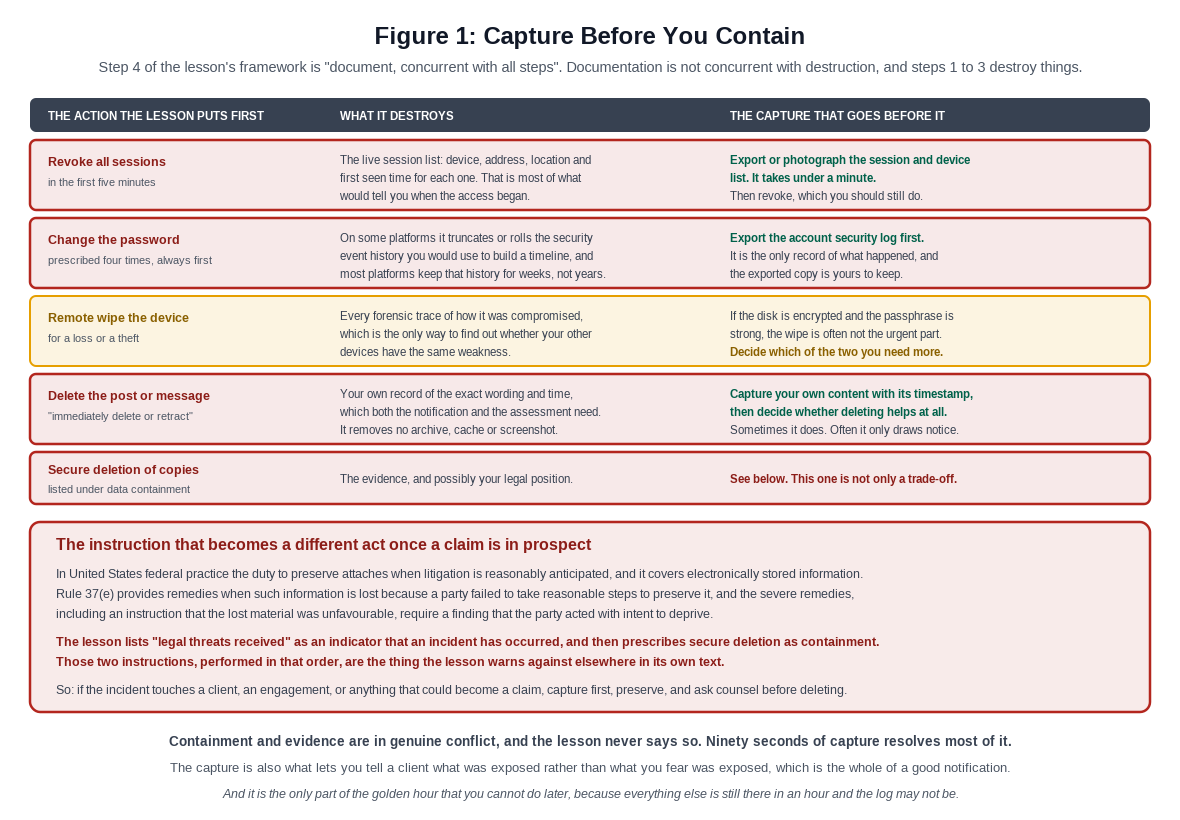
Figure 1. What each common containment action destroys.
The standard framework is: stop, assess, contain, document, notify, recover, learn. Document is step 4, described as concurrent with all the others.
Documentation is not concurrent with destruction, and steps 1 to 3 destroy things.
Revoking all sessions erases the live session list: the device, address, location and first-seen time for every active session. That list is most of what would tell you when the access began and from where. You should still revoke. Export or photograph the session and device list first, which takes well under a minute.
Changing the password usually comes before reviewing anything. On some platforms it truncates or rolls the security event history you would use to build a timeline, and the deeper problem is that most platforms retain that history for weeks rather than years. Export the account security log first. The exported copy is yours and it does not expire.
Remote wiping a device destroys every forensic trace of how it was compromised, which is the only route to finding out whether your other devices share the same weakness. If the disk is encrypted and the passphrase is strong, the wipe is frequently not the urgent part. Decide which of the two you need more, rather than reaching for the wipe because it is the available button.
Deleting a post or message destroys your own record of the exact wording and timestamp, which both the notification and the damage assessment require. It also removes no archive, no cache and no screenshot. Checklists often say to delete immediately and then, in the next step, ask whether screenshots were taken. Reverse those. Capture your own content with its timestamp, then decide whether deletion helps. Sometimes it does, because it removes the convenient copy. Often it only draws attention that the original would not have attracted.
The instruction that becomes a different act
Containment checklists commonly include secure deletion of compromised copies. In most incidents that is a defensible housekeeping decision. In some it is not.
In United States federal practice the duty to preserve attaches when litigation is reasonably anticipated, and it covers electronically stored information. Rule 37(e) provides remedies when such information is lost because a party failed to take reasonable steps to preserve it, and the severe remedies, including an instruction to the jury that the lost material was unfavorable, require a finding that the party acted with intent to deprive (Reference 3).
Now look at a typical list of incident indicators. “Legal threats received” is a common one: a sign that an incident has occurred. And secure deletion is a common containment step.
Performed in that order, those two instructions are exactly what source protection guidance warns against when it says not to destroy evidence after a subpoena. The gap is that the duty does not begin at the subpoena. It begins when a claim becomes reasonably foreseeable, which is usually earlier and is often the same moment you decide you have an incident.
So the rule for anything touching a client, an engagement, or anything that could become a claim: capture, preserve, and ask counsel before deleting. The deletion is still available in a week. The alternative is not.
Why this is worth ninety seconds
Beyond the legal point, the capture is what lets you tell a client what was exposed rather than what you fear was exposed. That distinction is the whole of a good notification. A notification built on evidence is a professional act. A notification built on worst-case assumption is an apology with numbers attached, and it does more damage to the relationship than the incident usually did.
2. The Password Change Is Not the Containment
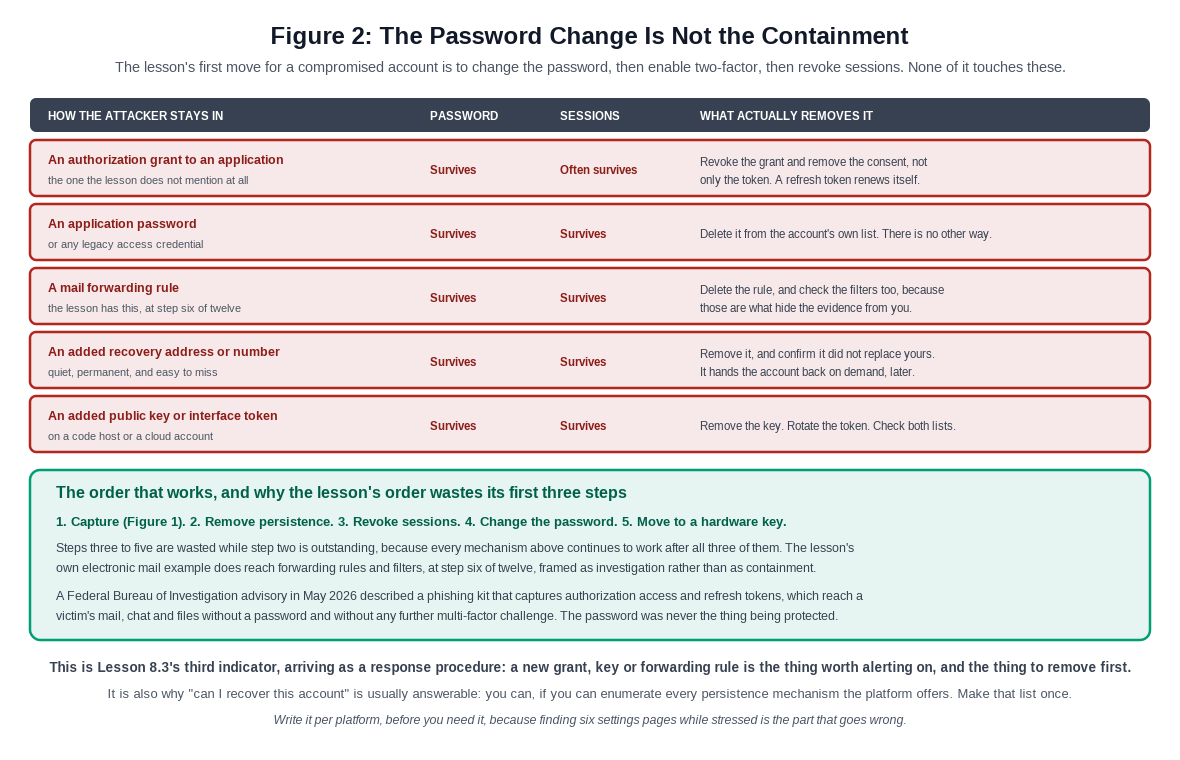
Figure 2. Five mechanisms that survive every step on the standard checklist.
For a compromised account, the standard checklist says: change the password immediately from a trusted device, enable two-factor if not already enabled, revoke all sessions, remove unknown devices.
None of that touches how an attacker actually stays in.
An authorization grant to a third-party application. Checklists rarely mention this. An approved application holds its own tokens, which are not revalidated against your password on each call, and a refresh token renews itself quietly for as long as the grant stands. Removing it means revoking the grant and removing the consent, not only expiring the token.
An application password, or any legacy access credential. Survives both. It exists in a separate list and is deleted there or not at all.
A mail forwarding rule. Survives both. When checklists reach it at all, it is usually late, as investigation rather than containment. Check the filters at the same time, because filters are what hide the evidence from you while the forwarding runs.
An added recovery address or telephone number. Survives both. This is the quiet one. It hands the account back on demand, months later, and it is easy to miss because it looks like a setting rather than an intrusion. Confirm it did not replace yours.
An added public key or interface token, on a code host or a cloud account. Survives both. Remove the key, rotate the token, and check both lists rather than one.
Why the password was never the thing
A Federal Bureau of Investigation advisory in May 2026 described a phishing kit that captures authorization access and refresh tokens, which reach a victim’s mail, chat and files without a password and without any further multi-factor challenge (Reference 1). The credential was never intercepted, so there is nothing for a password change to invalidate. Secondary analysis of this class of attack reports that password resets do not reliably revoke such tokens and that the grant itself must be removed (Reference 2, which is vendor and press material rather than platform documentation, and should be read as such).
The corrected order:
- Capture (Section 1).
- Remove persistence: grants, application passwords, forwarding rules, filters, recovery addresses, keys, tokens.
- Revoke sessions.
- Change the password.
- Move to a hardware key.
Steps 3 to 5 are wasted effort while step 2 is outstanding, because every mechanism above keeps working after all three of them.
The preparation that makes this fast
The question every checklist asks early is whether the account can be recovered or must be abandoned. That question is usually answerable, and the answer is usually yes, if you can enumerate every persistence mechanism the platform offers.
So enumerate them once, per platform, in advance. Where is the connected applications list. Where are the application passwords. Where are the forwarding rules and the filters. Where are the recovery methods. Where are the keys and tokens. Write the six paths down for each account that matters.
Finding six settings pages while stressed is the part that goes wrong, and it is the part you can remove entirely on a quiet afternoon. This is Lesson 8.2’s argument again: build it so that the right action is available rather than depending on recalling where things are.
It is also Lesson 8.3’s third indicator arriving as a response procedure. A new grant, key or forwarding rule was the thing worth alerting on. It is now the first thing to remove.
3. Reversible by Default
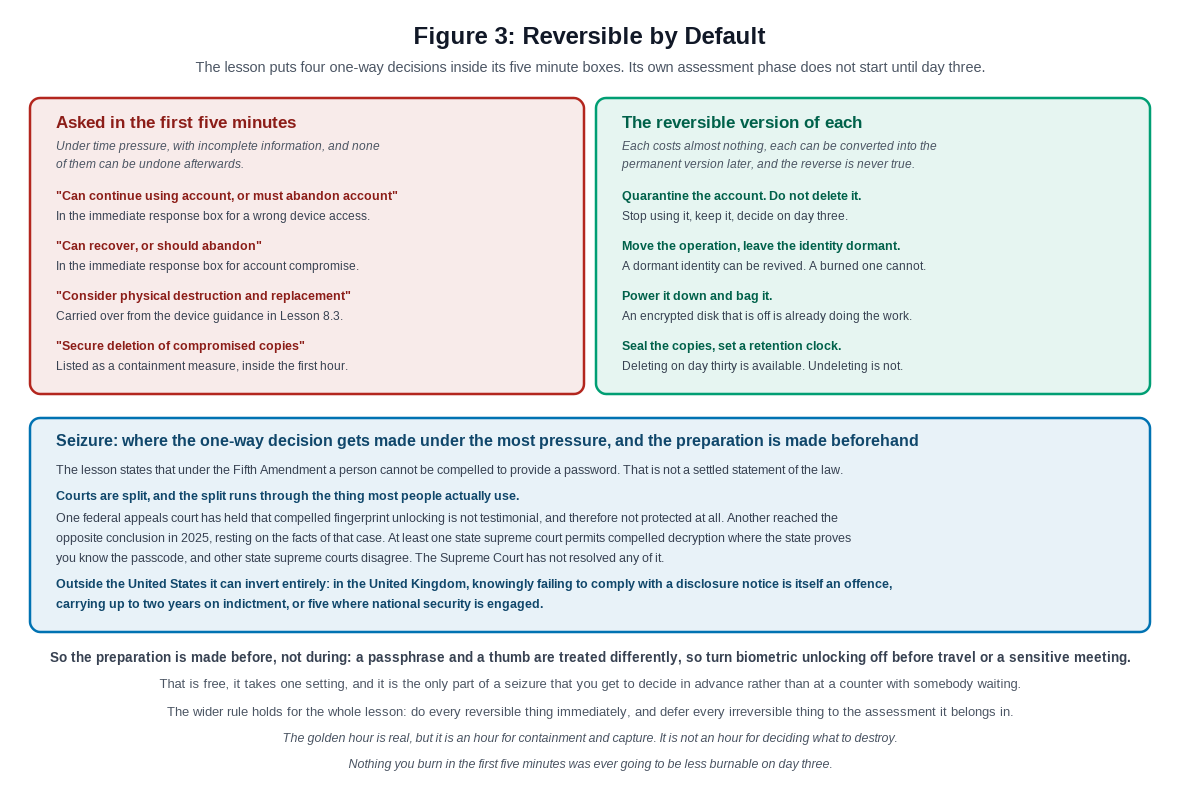
Figure 3. Four one-way decisions, and the versions that keep your options.
Standard immediate-response checklists contain four decisions that cannot be undone:
- Can the account continue, or must it be abandoned?
- Can the identity be recovered, or should it be abandoned?
- Should the device be physically destroyed and replaced?
- Should the compromised copies be securely deleted?
All four are asked under time pressure, with incomplete information, by somebody who has just had a bad surprise. And the assessment and planning phase that should inform them typically does not begin until day three.
That is the error, and it is a structural one rather than a detail. The discipline is to do everything reversible immediately, and defer everything irreversible to the assessment it belongs in.
Quarantine the account rather than deleting it. Stop using it, remove the persistence, leave it in place. You can delete it on day three with full information. You cannot undelete it on day three with full information.
Move the operation and leave the identity dormant. A dormant identity can be revived if the assessment shows the linkage was weaker than it looked. A burned one is gone, along with its reputation, its history and its contacts, which are expensive to rebuild.
Power the device down and bag it. An encrypted disk that is powered off is already doing most of the work. The wipe and the destruction remain available, and they destroy the forensics that would tell you whether this was opportunistic or targeted, which is the single fact that drives every other decision.
Seal the copies and set a retention clock rather than deleting them in the first hour. Deleting on day thirty is available. Undeleting is not.
In each case the reversible version costs almost nothing and converts into the permanent version at any later point. The reverse is never true. Nothing you burn in the first five minutes was going to be less burnable on day three.
Seizure, where the one-way decision is made under the most pressure
A common claim, under device seizure, is that the Fifth Amendment means a person cannot be compelled to provide a password.
That is not a settled statement of the law, and the error matters because it is the claim you would rely on at a border or a door.
Courts are genuinely split, and the split runs through the unlock method most people actually use. One federal appeals court has held that compelled fingerprint unlocking is not testimonial and is therefore not protected at all, reasoning by analogy to routine fingerprinting and blood draws. Another reached the opposite conclusion in 2025, resting expressly on the facts of that case (Reference 5). On passcodes, at least one state supreme court permits compelled decryption where the state proves beyond reasonable doubt that you know the passcode, and other state supreme courts disagree. The Supreme Court has declined to resolve it (Reference 4).
Outside the United States the position can invert completely. In the United Kingdom, knowingly failing to comply with a disclosure notice is itself a criminal offense, carrying up to two years on indictment, or five years where the notice was given on national security grounds (Reference 6). There, refusing is the crime.
The preparation that helps is made in advance, not during. Since a passphrase and a thumb are treated differently, and in at least one jurisdiction the thumb has no protection at all, turn biometric unlocking off before travel or before a sensitive meeting. That is one setting, it is free, and it is the only part of a seizure you get to decide calmly rather than at a counter with somebody waiting.
“This varies by jurisdiction” is the right caveat. Following it with a confident single-jurisdiction claim is the pattern that makes a caveat useless.
4. Triage on Whether It Is Still Growing
A typical severity scale runs from Level 1, a minor procedural violation, to Level 4, lives at risk. Response times are then set from the level: Level 1 within 24 hours, Level 2 within 4 hours, Level 3 within an hour, Level 4 immediately.
Severity is the wrong variable for that.
Severity tells you how much this will cost. Urgency is a different question: is the exposure still growing? Those are independent, and it is urgency that should drive what you do in the next ten minutes.
A moderate exposure that is still spreading, an active session, a forwarding rule running right now, a post gaining reach, is more urgent than a severe exposure that is already fully contained. A laptop stolen three weeks ago is Level 3 or 4 on that scale, and there is nothing to do in the next ten minutes that could not be done tomorrow with better information.
Recognition checklists usually ask the right question once: is it still ongoing, active or contained? Then they never use the answer. Promote it.
Two triage questions, in this order:
- Is it still growing? If yes, stop the growth, which is the persistence removal in Section 2 and nothing else. If no, you have time, and time is what produces a good assessment.
- Who bears the consequence? Lesson 8.4’s Figure 1. If the answer is a third party whose safety is at stake, everything changes, including whether you are the right person to be handling it.
Severity still matters. It determines the size of the response and who needs to be told. It does not determine the clock.
There is a second reason to separate these. Severity definitions usually mix exposure with consequence, so two incidents with identical technical facts land at different levels depending on whose data was involved. That is correct as an assessment of cost and wrong as an input to a stopwatch.
5. The Incident You Find Six Months Late
Most incident response frameworks are built around incidents you detect promptly. The framework starts at detection, the first hour starts at detection, and the example scenarios all begin with somebody noticing.
The common case is different. Most real incidents are discovered late, by somebody else. A client mentions something odd. A colleague saw a post. A breach notification arrives naming a service you used. Your handle turns up somewhere it should not.
When that happens, the first hour passed in the spring, and the specific problem is that the evidence has already expired. Platform security logs commonly retain for a limited window, frequently measured in weeks or a few months. The session that mattered is gone from the list. The security event that would have dated the access has rolled off. You are left with an incident you cannot assess, and the honest output is a shrug.
That is fixable, cheaply, and the fix has to be in place beforehand.
Export your own account security logs on a schedule. For the handful of accounts that actually matter, export the security and activity history periodically and keep the exports. The platform will not retain them long enough to answer a question you will ask in month seven. Your copies will.
This is the same move as Lesson 8.3’s shift from polling to alerting, applied to retention rather than to attention: the automated thing that runs whether or not you remember, so that the question is answerable later. It takes an afternoon once.
Two further things belong in a late-discovery procedure:
Reconstruct from what is durable. Message headers, your own sent items, repository history, billing records, backup timestamps and anything you exported. These outlive platform logs and are often enough to bound a timeline even when the security log is gone.
Record the near miss. Near misses are the highest-value incident data available because they are free: the wrong account opened and closed before anything happened, the message caught before sending, the scope item questioned before testing. Writing them down for a few months produces real evidence about which failure patterns are actually yours. Lists of common OPSEC failure patterns are plausible and unevidenced. Your own near-miss log is evidence, and it is the only way to learn where your procedures are brittle without paying for the lesson.
6. What the Standard Approach Gets Right
The premise is correct. Prevention fails, failure is normal, and preparing for it is the professional act.
The usual incident categories are well drawn: identity compromise, information disclosure, device compromise, surveillance detected, and operational exposure. That is a clean taxonomy, and it maps onto Lessons 8.1 to 8.4 without forcing.
A good post-incident review template is the most valuable artifact in incident response. It separates the direct cause from the root cause, records what worked as well as what failed, and, in particular, has a human factors block: were you rushed, tired, distracted, complacent, confused, pressured? Most incident reviews stop at the technical cause and then recommend trying harder. Asking whether somebody was tired at 11pm at the end of an engagement is how you find the fix that is a change to the system rather than an instruction to the person.
Know what to share and what not to share. Lessons can be published without client identities, source information or undisclosed vulnerabilities, and the good guidance says so.
And recovery means arriving somewhere better, not back where you were. That is a higher bar than most guidance sets, and it is the correct one.
One framing to keep and apply more widely: do not compound the incident with panicked actions. That instinct is correct, and Section 3 is simply that instinct taken seriously. The panicked action is usually an irreversible one, and the way to prevent it is not composure but a procedure that does not ask for an irreversible decision in minute four.
7. The Short Version, and the End of Module 8
When you realize something has gone wrong:
Capture. Session list, security log, your own content, with timestamps. Ninety seconds, and it is the only thing that expires.
Ask whether it is still growing. If yes, remove the persistence: grants, application passwords, forwarding rules, filters, recovery methods, keys. If no, you have time.
Then revoke, then change the password, in that order, because the first two steps were the containment and these two are the cleanup.
Quarantine, do not burn. Stop using it, keep it, decide on day three.
Preserve if a claim is foreseeable, and ask counsel before deleting anything.
Write the review, with the human factors section filled in honestly, because that is where the fix lives.
On Module 8 as a whole
Five lessons, and one pattern runs through all of them. Security advice usually states its best principle early and correctly, that security which is too complex or inconvenient will be abandoned, and then prescribes the maximal version anyway. Six separation layers across four identities. A detection routine costing two and a half to seven working weeks a year. Tor-only research. Four irreversible decisions in the first five minutes.
The principle is right every time. The application is what keeps slipping, and the direction of the slip is always the same: toward the version that is more thorough on paper and less likely to survive a month of real work.
So the question to carry out of this module is the one Lesson 8.2 asked about compartments, applied to everything else: what happens if I stop paying attention? A procedure stops. An alert still arrives. A compartment built so the wrong action is impossible still holds. A report written to degrade safely is still safe. A reversible decision is still reversible.
Build the versions that do not need you, and operational security becomes sustainable rather than aspirational.
Quiz
Question 1. Why should capture precede containment?
A. Because containment actions frequently fail on the first attempt B. Because most platforms require evidence before they will act on a report C. Because revoking sessions, changing passwords and wiping devices destroy the records of what happened, and those records expire while the other actions do not D. Because insurers require documentation within the first hour
Answer: C
Everything else is still available in an hour. The session list and the security log may not be.
Question 2. An attacker added a mail forwarding rule and an authorization grant. What does changing the password accomplish?
A. It revokes both, since both derive from the password B. Nothing against either. Both survive a password change, a session revocation and a second-factor enrollment C. It revokes the grant but not the forwarding rule D. It revokes the forwarding rule but not the grant
Answer: B
A granted application holds its own renewing tokens, and a forwarding rule is a setting. Persistence is removed first, or the other steps are wasted.
Question 3. What is the correct containment order for a compromised account?
A. Capture, remove persistence, revoke sessions, change password, move to a hardware key B. Revoke sessions, change password, remove persistence, enable two-factor C. Change password, enable two-factor, revoke sessions, review activity D. Enable two-factor, capture, change password, revoke sessions
Answer: A
The first two steps are the containment. The last two are cleanup that only works once the first two are done.
Question 4. Which immediate-response decision should be deferred, and why?
A. Whether to notify the client, because notification may be premature B. Whether to revoke sessions, because it may alert the attacker C. Whether to change the password, because it may destroy log history D. Whether to abandon an account or identity, because it cannot be undone and the assessment is days away
Answer: D
Quarantine is reversible and costs almost nothing. Abandonment is permanent, and checklists ask for it in minute four.
Question 5. When does routine secure deletion become a different kind of act?
A. Once a claim becomes reasonably foreseeable, at which point a duty to preserve attaches B. Only once a subpoena has been formally served C. Only where the data belongs to a third party D. Only in jurisdictions with specific breach notification statutes
Answer: A
The duty does not begin at the subpoena. It begins at reasonable anticipation, which is often the same moment you decide you have an incident.
Question 6. A common claim is that the Fifth Amendment means you cannot be compelled to provide a password. What is wrong with that?
A. It applies only to criminal proceedings, not civil ones B. The courts are split, one federal appeals court holds compelled fingerprint unlocking is not protected at all, and elsewhere refusal can itself be an offense C. It was overturned by the Supreme Court in 2025 D. It applies only to devices owned by the person being compelled
Answer: B
The split runs through the unlock method most people use, and in the United Kingdom failing to comply with a disclosure notice carries up to two years, or five on national security grounds.
Question 7. What single preparation most improves your position if a device is seized?
A. Storing the recovery key with a lawyer B. Carrying a decoy device C. Turning biometric unlocking off before travel or a sensitive meeting D. Enabling remote wipe on all devices
Answer: C
A passphrase and a thumb are treated differently, and the thumb has no protection in at least one jurisdiction. It is one setting, decided calmly in advance.
Question 8. What should drive how fast you respond in the first ten minutes?
A. The severity level assigned during triage B. Whether the exposure is still growing C. Whether a client is involved D. Whether the incident is technical or social
Answer: B
Severity determines the size of the response and who is told. Urgency is a separate question, and a contained severe incident is less urgent than a spreading moderate one.
Question 9. Why is a late-discovered incident often impossible to assess?
A. Platform security logs retain for weeks or months, so the evidence expired before you knew to look B. Notification deadlines have already passed C. Memory of the period has faded beyond usefulness D. Attackers remove their traces after a defined dwell time
Answer: A
The fix is to export your own security logs on a schedule, beforehand, so the question stays answerable in month seven.
Question 10. Which part of a post-incident review produces fixes that hold, and why?
A. The severity rating, because it standardizes triage B. The timeline, because speed limits damage C. The containment checklist, because it removes decisions under pressure D. The human factors section, because it finds fixes that change the system rather than instructing the person
Answer: D
Asking whether somebody was tired at the end of an engagement is how a review produces a change that holds.
References
- Federal Bureau of Investigation, Internet Crime Complaint Center, Public Service Announcement PSA260521, 21 May 2026, describing a phishing kit that captures authorization access and refresh tokens giving access to a victim’s mail, chat and file services without a password and without further multi-factor challenge. Read 14 October 2026. https://www.ic3.gov/PSA/2026/PSA260521
- Press and vendor analysis of authorization token persistence, reporting that password resets do not reliably revoke captured refresh tokens and that the underlying consent must be removed. Secondary material rather than platform documentation, and listed as such. https://cybernews.com/security/attackers-abusing-oauth-to-maintain-access-despite-password-resets/
- Analysis of the reasonable anticipation of litigation standard under Federal Rule of Civil Procedure 37(e), including that the rule does not create a new preservation duty and that severe remedies require a finding of intent to deprive. https://web.archive.org/web/20240807132902/https://www.perkinscoie.com/en/news-insights/reasonable-anticipation-of-litigation-under-frcp-37e-triggers-and-limits.html
- Congressional Research Service, “Catch Me If You Scan: Constitutionality of Compelled Decryption Divides the Courts,” on the split among courts over compelled decryption and the foregone conclusion doctrine, and on the Supreme Court having declined to review such decisions. https://www.congress.gov/crs-product/LSB10416
- Center for Democracy and Technology, on the appellate split over compelled biometric unlocking, including the Ninth Circuit holding in Payne that compelled fingerprint unlocking is non-testimonial and the contrary 2025 decision in United States v. Brown. https://cdt.org/insights/circuit-court-split-lays-the-groundwork-for-scotus-case-on-biometric-cell-phone-unlocking/
- Regulation of Investigatory Powers Act 2000, section 53, on the offense of knowingly failing to comply with a section 49 disclosure notice, with a maximum of five years on indictment in a national security case and two years in any other case. https://www.legislation.gov.uk/ukpga/2000/23/section/53
Where This Goes Next
Module 8 is complete. Its five lessons share one theme: security that is too complex or inconvenient gets abandoned, so build the version that does not need you.
Module 9 turns to privacy-focused service alternatives: de-Googling, cloud storage, self-hosting and search. Two things from this module should travel with you into it.
Lesson 8.4’s question about who operates the thing you depend on. Every service alternative is a new trusted party, and the question of what that party holds, and what it would produce on request, is the same question Lesson 8.3 asked about platform records.
And Section 5 of this lesson. Any service you move to has a log retention policy, and it determines whether an incident you discover in month seven is assessable or is a shrug. That is worth knowing before you migrate, not after.
Next module: Module 9 Lesson 1: De-Googling: Buy a Domain First, and Decide About the Phone