Compartmentalization: Build It So the Wrong Thing Is Impossible
About This Lesson
Compartmentalization means keeping your identities, devices, networks and data apart, so that a failure in one does not expose the others. The standard model is good. It starts from need-to-know, lists the ways compartments leak into each other, and warns that a system too complex to keep up will be abandoned. That last warning is correct and rarely stated.
This lesson adds three things, and the first changes how you build.
The standard advice asks for discipline where it should ask for construction. “Maintain separation absolutely” is a promise you make to yourself, under load, at the end of a long week. Every separation exists in two forms: one you have to remember, and one where the wrong action is simply unavailable. Most guides describe the first.
The usual six separation layers contradict the sustainability warning. A common setup runs four compartments (personal, work, research and anonymous) across six layers. That is twenty-four things to hold at the same time, indefinitely, which is the complexity the warning is about.
The usual list of leaks is strong on behavior and silent on identifiers. The dull things that actually link accounts, a reused phone number, a shared recovery address, a payment method, are usually absent. They are also the cheapest to fix, because they are decisions rather than behaviors.
And one thing has changed recently, in the direction that makes the hardest layer harder.
Learning Objectives
After you read this lesson, you can do these tasks:
- Distinguish a compartment held by attention from one where the wrong action is impossible, and prefer the second.
- Apply the test that separates them, on any separation you are designing.
- Rank the six separation layers by what they cost to maintain against what they prevent.
- Explain why a fixed schedule is a signature rather than a defense.
- Name the five identifiers that link accounts without any behavioral mistake, and fix them at account creation.
- State accurately what changed about behavioral linkage, with its caveats.
- Apply need-to-know to a penetration test.
Prerequisites
- Lesson 8.1, whose conclusion this lesson builds.
- Module 6 Lesson 6.7 on structure against promise, which is the argument underneath Section 1.
- Module 4 Lesson 4 on recovery, which Section 3 returns to.
1. Discipline or Construction
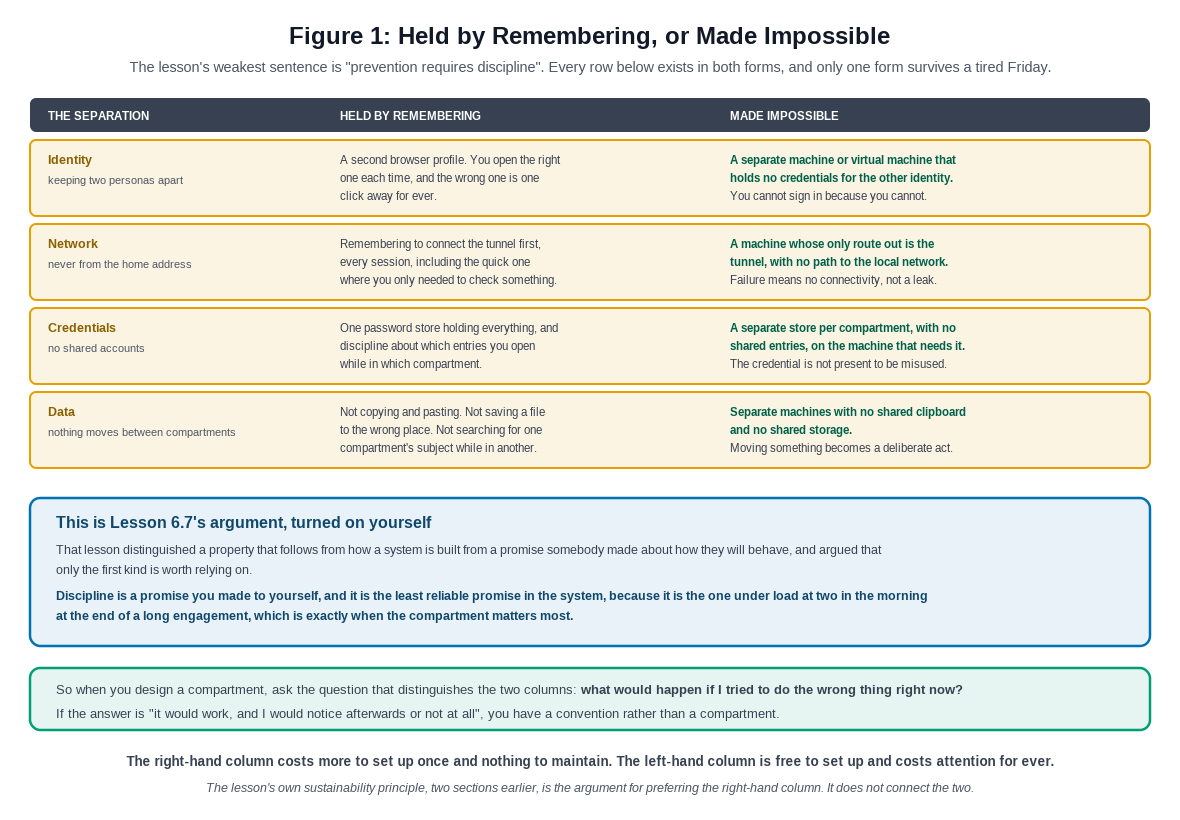
Figure 1. Four separations, each in both forms.
Identity. A second browser profile depends on opening the right one every time, and the wrong one stays a click away forever. A separate machine or virtual machine holding no credentials for the other identity cannot sign in to it at all.
Network. Remembering to connect the tunnel first, every session, including the quick one where you only needed to check something. Or a machine whose only route out is the tunnel, with no path to the local network, where failure means no connectivity rather than a leak.
Credentials. One password store holding everything plus discipline about which entries you open. Or a separate store per compartment with no shared entries, where the credential is not present to be misused.
Data. Not copying and pasting between compartments. Or separate machines with no shared clipboard, where moving something becomes a deliberate act you would notice performing.
The test
When you design a separation, ask: what would happen if I tried to do the wrong thing right now?
If the answer is “it would work, and I would notice afterward or not at all”, you have a convention rather than a compartment.
Why this is the same argument as Lesson 6.7
That lesson distinguished a property that follows from how a system is built from a promise about how somebody will behave, and argued that only the first is worth relying on. Tor’s guarantee holds because of how circuits are constructed, not because relay operators promised anything.
Discipline is a promise you made to yourself, and it is the least reliable promise in the system, because it is the one under load at two in the morning at the end of a long engagement. That is exactly when the compartment matters most.
The right-hand column costs more to set up once and nothing to maintain. The left-hand column is free to set up and costs attention forever. The sustainability principle is the argument for preferring the right-hand column, even though guides rarely connect the two.
2. Six Layers, Four Identities
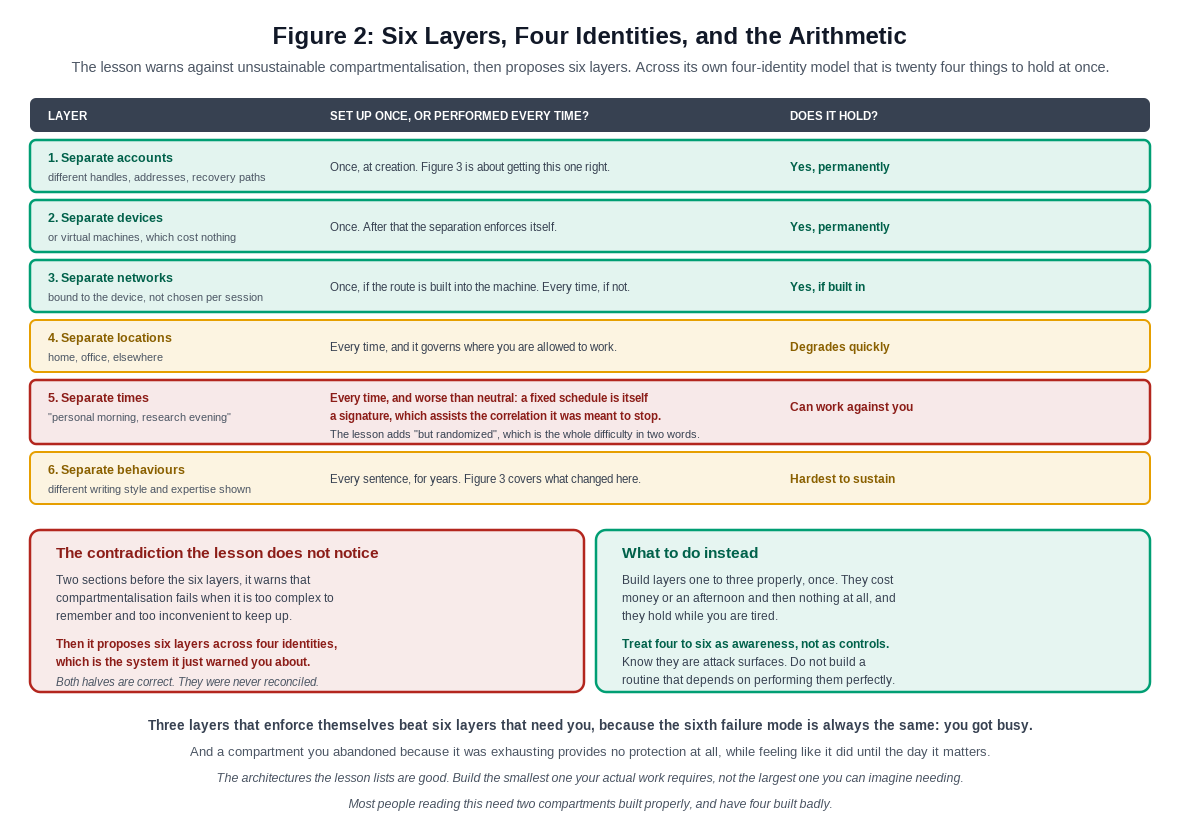
Figure 2. Which layers survive a working week.
The standard model stacks six separation layers: different accounts, different devices, different networks, different locations, different times, and different behaviors. The idea is that an attacker must defeat several layers to link two identities. The layers are not equivalent, and the difference is whether they are set up once or performed every time.
Layers that enforce themselves. Separate accounts, separate devices, separate networks. Each costs money or an afternoon, once. After that the separation holds without you. These are Figure 1’s right-hand column.
Layers that need you, every time. Separate locations, separate times, separate behaviors. Each costs attention indefinitely, and each degrades.
The time layer is worse than neutral
A typical time rule reads: “Personal in the morning, work during business hours, research in the evening (but randomized).”
A fixed schedule is itself a signature. If your research identity is reliably active between eight and eleven in the evening and your personal identity is reliably quiet then, that pattern assists the correlation it was meant to prevent. This is Lesson 6.9’s timing attack and Module 3 Lesson 4’s, arriving in your own calendar.
The phrase “but randomized” compresses the whole difficulty into two words. Genuinely randomizing your working hours across years is not a thing people do.
The contradiction
The sustainability principle warns that compartmentalization fails when it is too complex to remember, too inconvenient to keep up, or too rigid to adapt.
Six layers across four identities is the system that warning describes.
Both halves are correct. Guides state them both and rarely reconcile them.
What to do instead
Build layers one to three properly, once. They hold while you are tired.
Treat layers four to six as awareness rather than controls. Know they are attack surfaces. Do not build a routine that depends on performing them perfectly, because a compartment you abandoned because it was exhausting provides no protection while feeling like it does.
Build the smallest architecture your actual work requires, not the largest you can imagine needing. Most people reading this need two compartments built properly and have four built badly.
3. What Actually Links Accounts
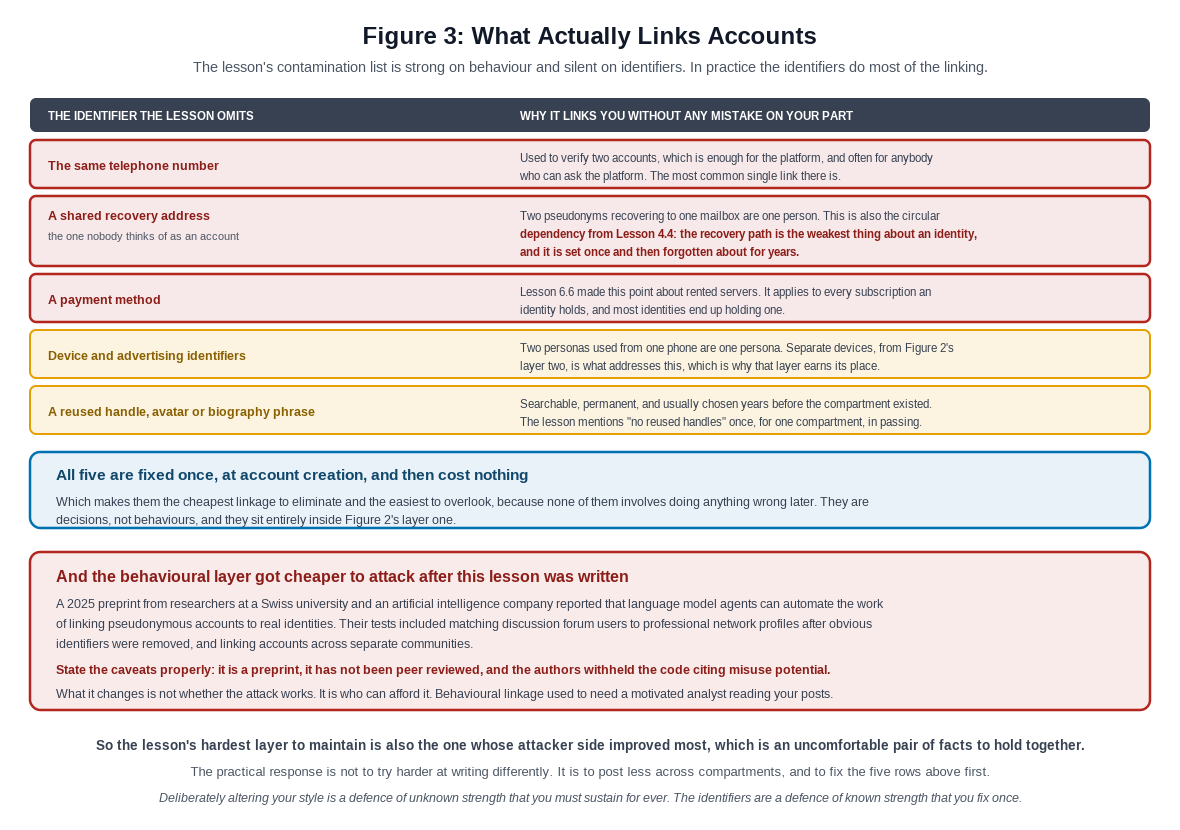
Figure 3. The identifiers, and what changed about behavior.
The usual list of contamination vectors covers temporal, network, behavioral, data, social and physical leaks. All of them are real, and all of them are about things you do.
Five things that link accounts without any mistake on your part are usually missing.
The same telephone number. Used to verify two accounts, which is enough for the platform and often for anybody who can ask the platform.
A shared recovery address. Two pseudonyms recovering to one mailbox are one person. This is also the circular dependency from Lesson 4.4: the recovery path is the weakest thing about an identity, and it is set once and then forgotten for years. It is also a known hard problem for pseudonymous accounts specifically, because the usual remedy is identity proofing (Reference 4).
A payment method. Lesson 6.6 made this point about rented servers. It applies to every subscription an identity holds, and most identities end up holding one.
Device and advertising identifiers. Two personas used from one phone are one persona. Separate devices are what addresses this, which is why that layer earns its place in Figure 2.
A reused handle, avatar or biography phrase. Searchable, permanent, and usually chosen years before the compartment existed. Guides tend to mention “no reused handles” once, in passing.
All five are fixed once, at account creation, and then cost nothing. That makes them the cheapest linkage to eliminate and the easiest to overlook, because none involves doing anything wrong later. They are decisions, not behaviors.
And the behavioral layer got cheaper to attack
A 2025 preprint from researchers at ETH Zurich and Anthropic reported that language model agents can automate the work of linking pseudonymous accounts to real identities. Their tests included matching discussion forum users to professional network profiles after obvious identifiers such as names and usernames were removed, and linking accounts across separate communities (Reference 1).
State the caveats properly. It is a preprint. It has not been peer-reviewed. The authors withheld the code, citing misuse potential. Treat the specific accuracy figures as unverified.
What it changes is not whether the attack works, because behavioral linkage always worked given a motivated analyst. It changes who can afford it, and at what scale.
Which makes the usual defense awkward
The standard answer to behavioral linkage is to vary your writing style between public and research identities. Deliberately altering your writing is a defense of unknown strength that you must sustain forever. Published obfuscation methods do reduce attribution accuracy in experiments, though they are judged on meaning retention and stealth as well as on accuracy (Reference 3), and one 2026 preprint suggests that prompting a model to imitate another author does not evade verification tools (Reference 2). The honest summary is that nobody can currently tell you how well this works against a current attacker.
So the practical response is not to try harder at writing differently. It is to post less across compartments, which reduces the material the attack needs, and to fix the five identifiers first, which is a defense of known strength that you set once.
4. What the Standard Model Gets Right
Three sections of correction can leave a false impression, so here is what holds up.
Need-to-know, worked through for a penetration test
Share information only with people who need it to do their specific task. “They’re trustworthy” and “they probably know anyway” are not reasons. Every person who knows something is a potential leak, a target for anyone who wants that information, and somebody who can be subpoenaed.
Apply it to a penetration test for a client:
Who needs to know the client’s identity?
| Who | Needs it? |
|---|---|
| You, the tester | Yes, you must know the target |
| Your company’s account manager | Yes, for the contract |
| Your company’s technical team | No: they can work on a generic identifier such as “Client123” |
| Your spouse | No, even if trustworthy |
| Fellow security researchers | No: you have a confidentiality obligation |
| Conference audiences, when you discuss methodology | Absolutely not |
Who needs to know the vulnerabilities you found?
| Who | Needs it? |
|---|---|
| The client’s security team | Yes, they need to fix them |
| The client’s executives | Maybe, depending on how the client is organized |
| Your colleagues | No: client confidentiality |
| Bug bounty platforms | No: this is a private engagement |
| Your blog readers | No: never disclose a client’s vulnerabilities |
The row people get wrong is the trustworthy one. Need-to-know is not a judgment of the person. It is a count of how many places the information can leak from.
The rest of it
The contamination list is good. Six vector types with concrete mechanisms. Nothing in Section 3 replaces it; the identifiers sit alongside it.
The sustainability principle is right, and most writing on this subject omits it entirely in favor of maximalism. The failure is not in stating it. It is in not applying it to the six-layer model.
Match the architecture to your threat model. A sensibly graded set of architectures, from two compartments to many, is better advice than recommending the largest.
Key Takeaways
- Ask what would happen if you tried to do the wrong thing right now. If it would work, you have a convention rather than a compartment.
- Every separation exists in two forms. Prefer the one where the wrong action is unavailable over the one you have to remember.
- Discipline is a promise to yourself, made under the worst conditions, which is Lesson 6.7’s argument turned inward.
- Three of the six layers enforce themselves and three need you. Build the first three properly and treat the rest as awareness.
- A fixed schedule is a signature. The time layer can work against you.
- Six layers across four identities contradicts the sustainability principle that the same guides state.
- Five identifiers link accounts with no behavioral mistake at all, and all five are fixed once at account creation.
- Behavioral linkage got cheaper to run. Post less across compartments rather than writing differently.
- Need-to-know counts leak points, not trustworthiness.
Knowledge Check
Question 1. What test distinguishes a compartment from a convention?
A. What would happen if you tried to do the wrong thing right now B. Whether it appears in your written threat model C. Whether it uses encryption at every layer D. How many separation layers it applies
Answer: A
If the answer is that it would work and you would notice afterward or not at all, the separation depends on attention rather than on construction.
Question 2. Why is a separate browser profile a weaker compartment than a separate virtual machine?
A. Browser profiles do not isolate cookies or storage B. Virtual machines encrypt their disks by default C. The profile depends on opening the right one every time, while the machine holds no credentials for the other identity D. Browser profiles share a network route and virtual machines do not
Answer: C
Option A is wrong: profiles do isolate storage. The difference is not what they separate, it is whether the wrong action remains available to you.
Question 3. Which three of the six standard separation layers enforce themselves once built?
A. Locations, times and behaviors B. Accounts, locations and behaviors C. Devices, times and networks D. Accounts, devices and networks
Answer: D
Each costs money or an afternoon once, and then holds without you. The other three must be performed on every occasion and degrade accordingly.
Question 4. Why is the separate-times layer worse than neutral?
A. Because a fixed schedule is itself a signature, which assists the correlation it was meant to prevent B. Because activity at unusual hours attracts attention from providers C. Because time zones differ between compartments D. Because logs record timestamps that cannot be altered
Answer: A
Adding “but randomized” compresses the whole difficulty into two words. Genuinely randomizing working hours across years is not something people sustain.
Question 5. What contradiction sits inside the standard six-layer model?
A. It recommends Tor for research while warning that Tor is widely blocked B. It says compartments should be documented and also that they should be deniable C. It warns that complex compartmentalization fails, then proposes six layers across four identities D. It requires separate devices while also recommending a single password store
Answer: C
Both halves are correct, and they are rarely reconciled.
Question 6. Which of these links two accounts without any behavioral mistake on your part?
A. Discussing the same technical topics in both compartments B. Accessing both accounts during the same hour C. Using a similar writing style across both D. Verifying both with the same telephone number
Answer: D
The other three are behavioral vectors that the usual contamination list covers well. The identifiers are usually absent from it, and they are the cheapest linkage to eliminate.
Question 7. Why are the five identifiers the cheapest linkage to fix?
A. They are fixed once at account creation and cost nothing afterward B. Platforms are legally required to remove them on request C. They only apply to accounts created after a certain date D. They can be changed retroactively without creating new accounts
Answer: A
They are decisions rather than behaviors, which is also why they are easy to overlook: none of them involves doing anything wrong later.
Question 8. What did the 2025 preprint on automated deanonymization report, and what are its caveats?
A. That stylometry has been shown ineffective against all current tooling, in peer-reviewed work B. That language model agents can automate linking pseudonymous accounts to real identities, in a preprint that was not peer-reviewed and whose code was withheld C. That platforms now share identifier data directly with researchers D. That behavioral linkage requires access to the platform’s internal logs
Answer: B
Tests included matching forum users to professional profiles after obvious identifiers were removed. What it changes is not whether the attack works but who can afford it and at what scale.
Question 9. What is the practical response to that finding?
A. Adopt a deliberately altered writing style across all compartments B. Use a language model to rewrite everything you post C. Post less across compartments, and fix the identifiers first D. Abandon pseudonymous research entirely
Answer: C
Deliberately altering style is a defense of unknown strength that must be sustained forever. Reducing the material the attack needs, and fixing defenses of known strength, are both available now.
Question 10. On a penetration test, does your company’s technical team need to know the client’s identity?
A. Yes, because they are trustworthy colleagues B. Yes, because they will probably find out anyway C. No. They can work on a generic identifier, and every extra person who knows is another place it can leak from D. Only if the client is a public company
Answer: C
Options A and B are the two reasons need-to-know exists to reject. It counts leak points, not trustworthiness.
References
- Reporting on the 2025 ETH Zurich and Anthropic preprint on automated deanonymization of pseudonymous accounts, including the preprint status and the withheld code. https://www.bankinfosecurity.com/ai-unmask-anonymous-users-at-scale-a-30868
- “Authorship Impersonation via LLM Prompting does not Evade Authorship Verification Methods,” on the limits of imitation as an obfuscation strategy. https://arxiv.org/abs/2603.29454
- Wikipedia, “Adversarial stylometry,” for the methods and the three-way evaluation of attribution accuracy, meaning retention and stealth. https://en.wikipedia.org/wiki/Adversarial_stylometry
- FIDO Alliance, account recovery best practices, on the difficulty of recovery for pseudonymous accounts with no identity proofing. https://fidoalliance.org/wp-content/uploads/2019/02/FIDO_Account_Recovery_Best_Practices-1.pdf
Where This Goes Next
Lesson 8.3 covers counter-surveillance, and Figure 2’s layers four to six are its territory. Read it knowing that those are the expensive layers, so that the question becomes which of them your work actually requires rather than how many you can perform.
Lesson 8.5 covers incident response, which is where the question this lesson does not answer belongs: what do you do when a compartment is contaminated? Prevention is half the job. The other half is how you detect that prevention failed, and what the burn procedure looks like afterward.
Next lesson: Module 8 Lesson 3: Counter-Surveillance: Six Indicators That Mean Something